Best Hamster Wheels for Syrian and Dwarf Hamsters: What to Look For Before You Buy
HAMSTER PRODUCT GUIDE
A good hamster wheel is not just a toy. For most hamsters, it is the main way to burn energy, reduce boredom, and follow their natural instinct to run at night. The safest choice is usually a wheel that gives your hamster enough diameter, a solid running surface, stable support, and quiet movement without forcing the back to bend.

SavingCat quick picks:
- Best overall: A solid-surface upright wheel sized large enough for your hamster to run without arching its back.
- Best for Syrian hamsters: A larger 10-12 inch wheel with a wide running track and a stable base.
- Best for dwarf hamsters: An 8-10 inch solid wheel that is easy to enter, easy to clean, and not too heavy to spin.
- Best quiet option: A bearing-based wheel with a rigid stand and no loose rattling parts.
- Best cage-space option: A wall-mounted or stand-mounted wheel that still leaves enough bedding depth and floor space.
Quick answer: For most pet hamsters, choose a solid-surface wheel that is large enough for a straight running posture. Syrian hamsters often need a larger wheel than many starter cages include. Dwarf hamsters may use a smaller wheel, but they still need a smooth surface, safe entry, and enough diameter to avoid back curve.
In this guide: We cover wheel size, safe surfaces, quiet designs, cage fit, cleaning, warning signs, and how to choose different wheel styles for Syrian and dwarf hamsters.
Who this guide is for
This guide is for new hamster owners, parents setting up a first cage, and anyone replacing a small, noisy, or unsafe starter wheel. It applies to Syrian hamsters, dwarf hamsters, Roborovski hamsters, winter whites, Campbell’s dwarfs, and hybrid dwarf hamsters. If your hamster avoids the wheel, runs with a curved back, or the wheel shakes at night, this checklist can help you choose a safer replacement.
What matters most when choosing a hamster wheel
The first decision is not color or price. It is fit. A wheel should allow your hamster to run with the spine as straight as possible. If the wheel is too small, the hamster may arch its back while running, which is uncomfortable and can discourage normal exercise. The second decision is surface. A solid track is usually safer than wire rungs because tiny feet and toes cannot slip through gaps.
Also check stability. A wheel that tips, wobbles, or scrapes the cage can scare a hamster and keep you awake at night. The best wheel for your home is the one your hamster can use safely every day, not the one that looks best in the cage photo.
Best options by need
Best overall: A large solid plastic or wooden wheel with a smooth running surface, a stable stand, and enough diameter for a straight back.
Best for Syrian hamsters: Choose a larger wheel, commonly around 10-12 inches depending on the hamster’s size. If the back curves, go larger.
Best for dwarf hamsters: Choose a solid 8-10 inch wheel that is light enough to spin easily but not so small that the body bends while running.
Best quiet wheel: Look for a sealed bearing or smooth axle, a rigid frame, and a design with fewer loose plastic joints.
Best for deep bedding cages: Use a stable stand or wall mount so bedding does not block the wheel from turning.
Hamster wheel size guide
| Hamster type | Common starting point | What to check |
|---|---|---|
| Syrian hamster | About 10-12 inches | Back should stay mostly straight while running |
| Dwarf hamster | About 8-10 inches | Wheel should spin easily without being too cramped |
| Roborovski hamster | About 8 inches or larger if needed | Stable entry and good grip matter because they are fast runners |
| Young or growing hamster | Size up early | Do not keep using a starter wheel once the back begins to curve |
These are practical starting points, not strict medical rules. Hamsters vary in body length. The most important test is how your individual hamster looks while running. If you see a clear curve in the back, the wheel is probably too small.
Solid wheel vs wire wheel vs saucer
A solid wheel is the easiest recommendation for most homes because it gives the hamster a continuous surface to run on. Wire wheels and ladder-style tracks can create foot and toe risks, especially if gaps are large or the surface flexes. Saucer wheels can work for some dwarf hamsters, but they need enough flat space and should not force the hamster to run with the body twisted sideways.
| Wheel type | Best for | Watch out for |
|---|---|---|
| Solid upright wheel | Most Syrian and dwarf hamsters | Must be large enough and stable |
| Wooden wheel | Natural-looking setups | Needs urine protection and regular cleaning |
| Plastic wheel | Easy cleaning and lighter spinning | Cheap models may wobble or rattle |
| Saucer wheel | Some dwarf hamster setups | Needs space; posture should not twist |
| Wire wheel | Usually not preferred | Foot gaps, toe risk, and poor running comfort |
Buying checklist
1. Diameter: Pick a wheel large enough for a straight running posture.
2. Surface: Choose a solid, smooth running track with enough grip.
3. Stability: Check that the wheel does not tip, scrape, or wobble at speed.
4. Noise: Look for bearing-based designs or tight construction if the cage is near a bedroom.
5. Cleaning: Choose a wheel you can remove and wash easily.
6. Cage fit: Make sure the wheel fits without reducing bedding depth, blocking tunnels, or hitting the lid.
Common mistakes to avoid
- Using the tiny wheel that came with a starter cage: Many starter wheels are too small for adult hamsters.
- Choosing wire rungs: Gaps can be unsafe for small feet and do not feel as natural as a solid surface.
- Ignoring back curve: If your hamster arches while running, size up.
- Buying only for silence: A quiet wheel still needs correct size, surface, and stability.
- Blocking the wheel with bedding: Deep bedding is good, but the wheel must spin freely.
How to tell if the wheel is working for your hamster
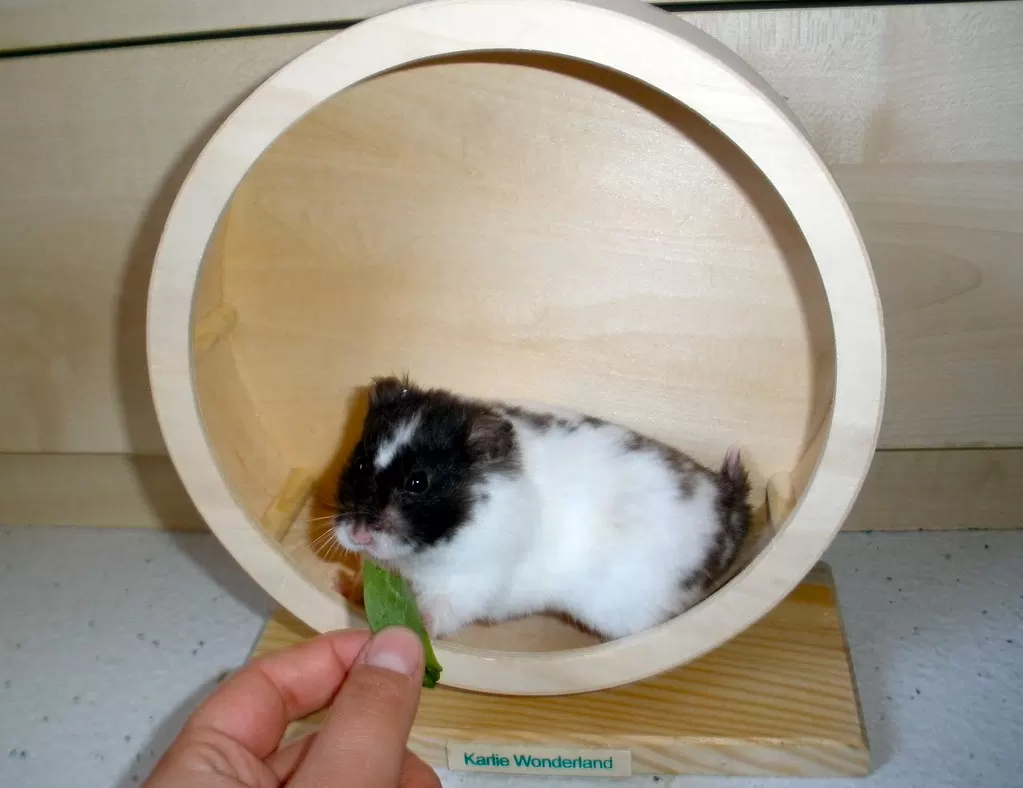
A good wheel should be easy for your hamster to start, comfortable to run on, and stable at night. Watch a short running session. The body should not be squeezed, the back should not form a strong arch, and the feet should not slip. If the hamster tries to run but keeps stopping, slipping, or climbing out, the wheel may be too small, too heavy, too unstable, or poorly placed.
FAQ
What size wheel does a Syrian hamster need?
Many Syrian hamsters need a wheel around 10-12 inches, but the best test is posture. If the hamster’s back curves while running, choose a larger wheel.
What size wheel does a dwarf hamster need?
Many dwarf hamsters do well with an 8-10 inch solid wheel. The wheel should spin easily and allow the hamster to run without a cramped posture.
Are wire hamster wheels safe?
Wire wheels are usually not the safest first choice because feet and toes can slip through gaps. A solid-surface wheel is generally better for daily running.
Why is my hamster wheel so loud?
Noise can come from a loose stand, poor axle, cage contact, bedding rubbing the base, or a cheap plastic frame. Tighten what you can, clear bedding away, and consider a smoother bearing wheel if the noise continues.
Should I use a saucer wheel?
A saucer can work for some dwarf hamsters, but it needs enough floor space and should not twist the hamster’s body while running. For many owners, a properly sized upright solid wheel is easier to evaluate.
SavingCat note: This guide is for practical shopping education. We may earn a commission if you buy through affiliate links on our site, at no extra cost to you. Always choose products based on your individual hamster’s size, behavior, and safety needs.
Related next step: Building a better small-pet setup? Pair the right wheel with deep bedding, a sand bath, chew-safe enrichment, and a hideout that lets your hamster feel secure.